Local Growth Strategy
Website, Reviews, Google Maps, or Ads: What Should You Fix First?
You may not need more marketing everywhere. Learn how to identify the weakest point in your customer journey and choose the right first priority.
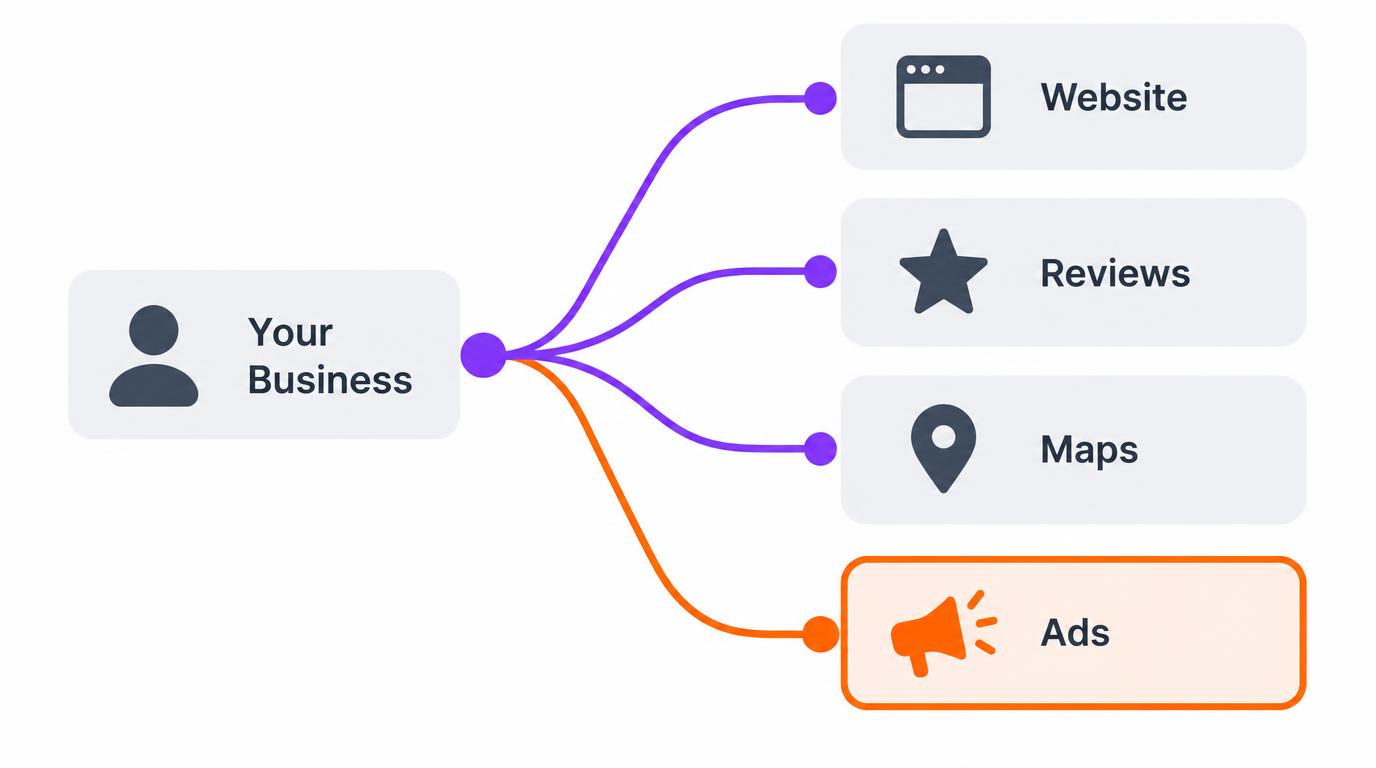
Home service companies are often told they need a new website, more reviews, better Google visibility, and paid advertising at the same time.
Sometimes that is true. It is rarely the most useful place to begin.
If the phone is not answered, buying more clicks can waste money. If the website creates distrust, stronger visibility may send more people into a weak experience. If the business already receives steady referrals but has very few recent reviews, credibility may be the immediate problem.
The best first investment depends on where the customer journey is breaking.
This framework will help you decide which area deserves attention first.
Think in terms of four stages
A local customer typically moves through four basic stages:
- Find the company
- Decide whether to trust it
- Contact the company
- Receive a useful response
Different marketing tools support different stages:
- Google Maps and local visibility help customers find you.
- Reviews help customers trust you.
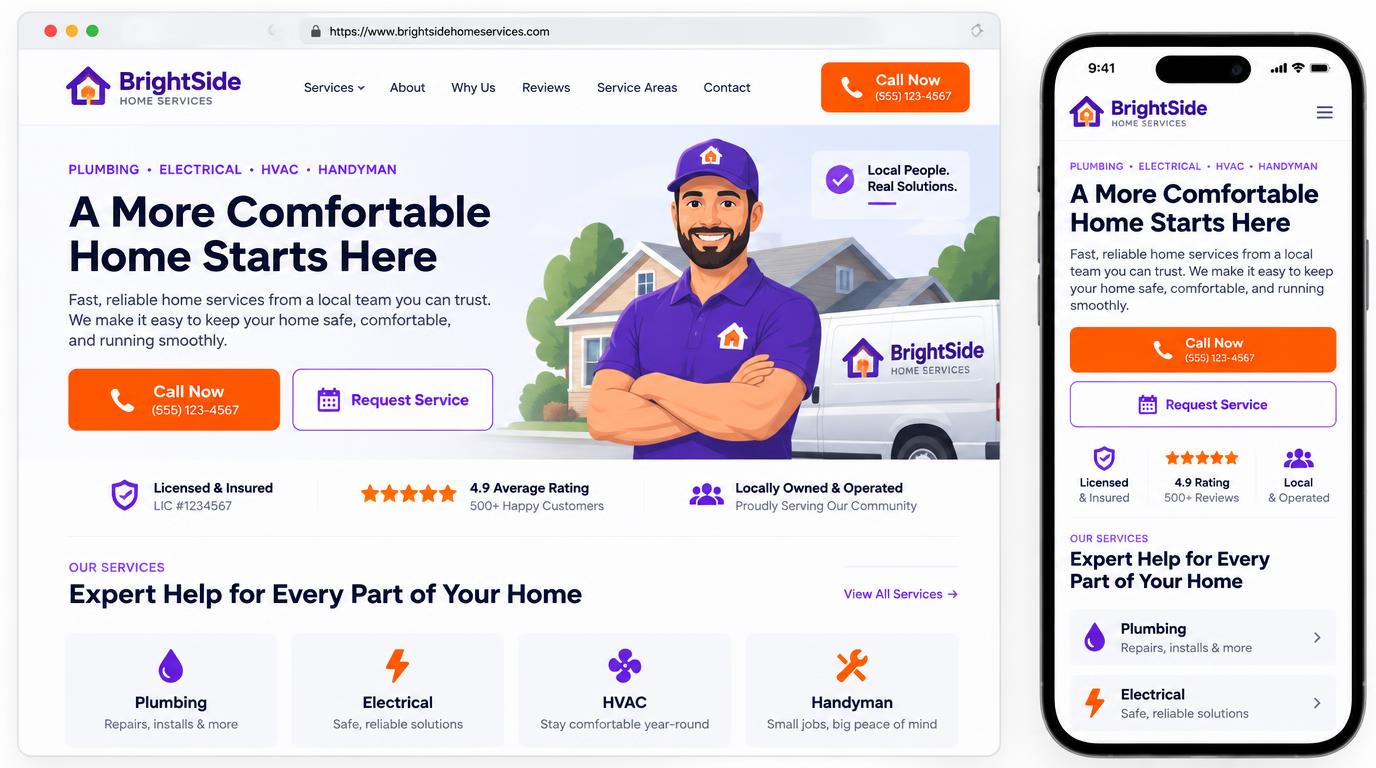
- Your website helps customers understand you and take action.
- Advertising creates additional opportunities to be found.
- Lead response determines whether an inquiry becomes a conversation.
Before selecting a service, identify the weakest stage.
Fix the website first when customers are confused
Your website should probably be the first priority if:
- It does not work well on mobile devices.
- The phone number is difficult to find.
- Important service pages are missing.
- The service area is unclear.
- Forms do not work or go to the wrong place.
- The design makes the company appear inactive or unprofessional.
- The website does not use HTTPS.
- Pages load slowly enough to frustrate visitors.
- Customers repeatedly ask questions the website should answer.
- The company has changed services, locations, or branding but the website has not.
A website does not need to win design awards. It needs to remove doubt and make the next step easy.
What to fix first on the website
Begin with conversion basics:
- Clarify the headline and service area.
- Make the phone number prominent and clickable.
- Repair every form and link.
- Create useful pages for the services you want to sell.
- Add authentic trust information.
- Improve mobile speed and readability.
- Confirm where every lead is delivered.
Google recommends an overall strong page experience rather than focusing on one isolated score. Its guidance includes mobile usability, secure delivery, useful content, and Core Web Vitals. See Google's page experience guidance.
Do not begin by changing colors or adding animation if customers still cannot tell what you do or how to contact you.
Fix reviews first when trust is the gap
Reviews may be the first priority if:
- Your competitors have substantially more recent feedback.
- Your rating or review recency creates concern.
- Happy customers are not consistently asked for feedback.
- The business has strong offline word of mouth but weak online proof.
- Reviews mention unresolved service or communication problems.
- Your team has no process for responding to reviews.
The objective is not simply accumulating stars. Reviews can reveal how customers experience communication, scheduling, workmanship, pricing clarity, and follow-up.
What to fix first with reviews
- Choose the appropriate point in the customer journey to request feedback.
- Make the request easy to complete.
- Ask consistently rather than only during slow periods.
- Allow customers to provide honest feedback.
- Respond professionally to both positive and negative reviews.
- Escalate service complaints internally.
- Never purchase reviews or pressure customers for a particular rating.
Review management works best when it reflects a good customer experience. Software cannot repair a service problem the company refuses to address.
Fix Google Maps visibility first when qualified customers cannot find you
Your Google Business Profile and local visibility may be the first priority if:
- The profile is incomplete or inaccurate.
- The primary category does not reflect the business correctly.
- Hours, phone number, or website link are wrong.
- Important services are missing.
- The profile has duplicate or conflicting information.
- The business is difficult to find for relevant local searches.
- Competitors consistently appear while your company is absent.
- Customers reach the wrong location or contact information.
Google explains that local results are primarily influenced by relevance, distance, and prominence. No company can pay Google for a better organic local ranking, and no reputable provider should guarantee a specific Map Pack position. Review Google's local ranking guidance.
What to fix first with local visibility
- Confirm the business is eligible for a Google Business Profile.
- Verify the business name, category, phone number, website, and hours.
- Use accurate service-area or address settings.
- Complete relevant services and business information.
- Resolve duplicates and obvious inconsistencies.
- Build a consistent review-request process.
- Connect the profile to useful service content on the website.
- Monitor calls, website visits, messages, and direction requests where available.
Avoid frequent, unnecessary changes to core profile information. Accuracy and consistency matter more than constant editing.
Use paid advertising when the foundation can convert demand
Advertising may be the right first growth investment when:
- The website or landing page clearly explains the offer.
- Calls and forms are tracked correctly.
- Someone reliably answers or follows up.
- The company knows which services and locations it wants to target.
- The available budget is realistic for the market.
- The business can handle additional work.
- The economics of the service support paid acquisition.
Paid advertising can create visibility more quickly than waiting for organic growth. It does not automatically fix weak positioning, poor reviews, missed calls, or a confusing website.
What to establish before spending more
- Define the service, location, and customer you want.
- Build a focused landing experience.
- Configure call and form tracking.
- Establish who responds to each lead.
- Decide how qualified leads, appointments, estimates, and completed jobs will be measured.
- Confirm that ad spend is separate from management fees.
- Review search terms and lead quality, not just clicks.
Clicks are activity. Qualified customer opportunities are closer to the business outcome.
Do not ignore lead response
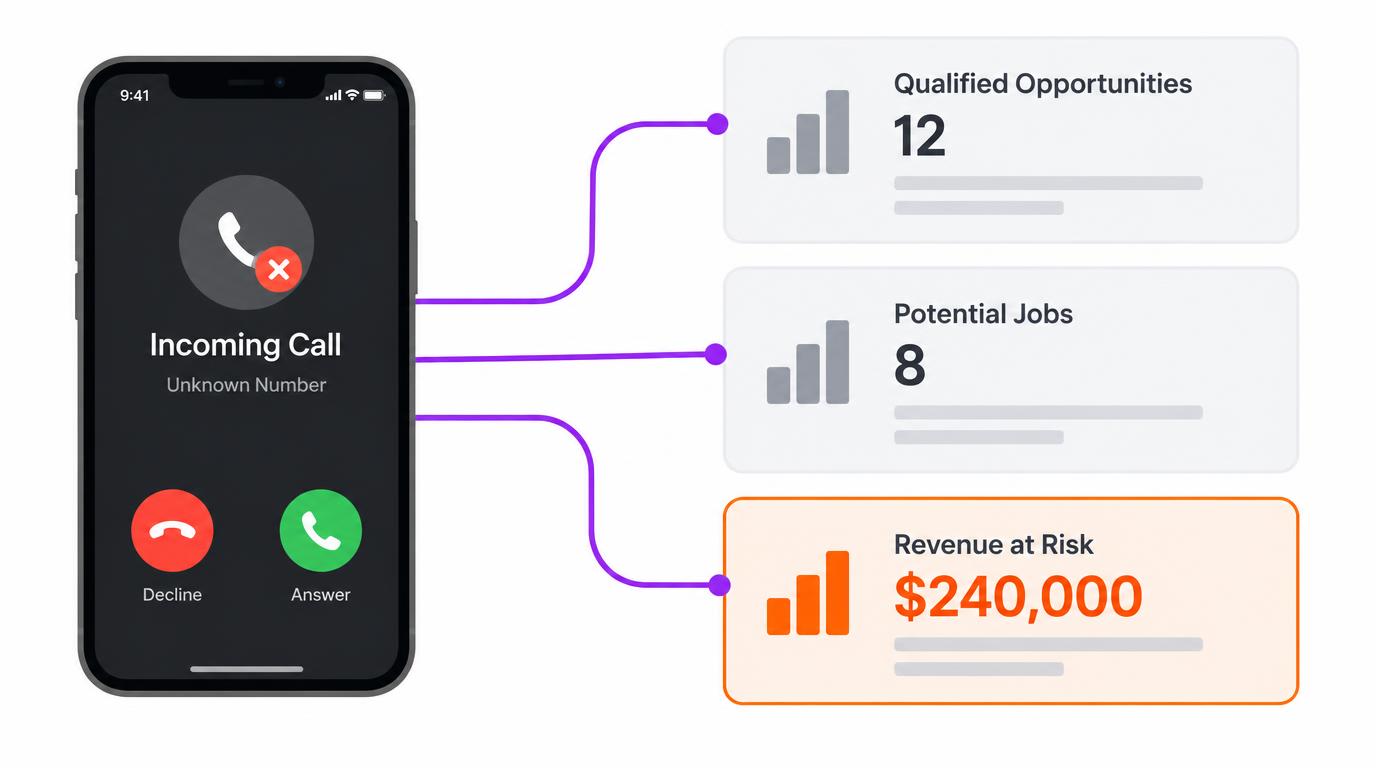
Website, reviews, Maps, and advertising can all perform their roles while the business still loses opportunities after contact.
Lead response deserves immediate attention if:
- Calls regularly go unanswered.
- Forms sit in an inbox.
- After-hours inquiries receive no acknowledgment.
- Estimates are not followed up.
- Different employees assume someone else will respond.
- The caller must repeat the same information several times.
- No one can explain what happens to a new lead.
Before increasing traffic, make sure new opportunities reach the right person through a channel the team already uses.
For some companies, a missed-call response, overflow process, or AI phone receptionist can close this gap. The system must follow approved business rules and make human escalation easy.
A simple decision framework
Ask these questions in order.
1. Can customers find us?
If no, review Google Business Profile accuracy, local visibility, service content, and relevant advertising.
2. Do customers trust what they find?
If no, improve reviews, company information, credentials, photographs, and consistency.
3. Can customers easily contact us?
If no, improve the website, mobile experience, phone placement, forms, and calls to action.
4. Do we respond effectively?
If no, fix call coverage, lead delivery, routing, follow-up, and accountability.
5. Can we measure what happens?
If no, establish practical tracking before scaling spending.
The earliest serious failure in that sequence is usually the best place to start.
Four common scenarios
Scenario 1: Strong referrals, outdated website
The company receives word-of-mouth business, but the website looks neglected and is difficult to use on a phone.
Likely first priority: Website conversion and credibility.
Scenario 2: Good website, weak review presence
The company communicates clearly online, but nearby competitors show more recent and convincing customer feedback.
Likely first priority: Review-generation and response process.
Scenario 3: Strong reputation, poor local visibility
Customers who know the company trust it, but the business is difficult to find for relevant local searches.
Likely first priority: Google Business Profile accuracy and local visibility.
Scenario 4: Leads arrive, but follow-up is inconsistent
The business already receives calls and forms, but employees miss calls or respond too slowly.
Likely first priority: Lead response and call coverage before buying more traffic.
When a combined approach makes sense
Sometimes several problems are connected closely enough that fixing only one produces limited value.
Examples include:
- A new website with no review proof
- Better Maps visibility sending visitors to a broken website
- Ads generating calls that nobody answers
- Review requests being sent without a consistent job-completion process
A combined plan should still have an order. Establish the foundation, correct the largest constraint, measure the result, and then expand.
Avoid launching every possible channel simply because the tools are available.
What to review during the first 30 days
Regardless of the chosen priority, establish a baseline for:
- Website calls and forms
- Mobile usability
- Google Business Profile accuracy
- Review quantity, rating, and recency
- Relevant competitor presence
- Missed calls
- Response time
- Appointments or estimates
- Completed jobs when trackable
The baseline does not need to be complicated. It needs to be consistent enough to show whether the work is improving the customer journey.